You can keep doing everything right and still watch someone less qualified get the opportunity.
We both know that. You've probably lived it more than once.
And if you're here, you're probably starting to wonder whether there's something going on that has nothing to do with your performance, your credentials, or how hard you work.
There is. And understanding it changes everything.

Hi, I'm Jennifer.
I spent 28 years at Lockheed Martin as a systems engineer, program manager, and chief engineer. I led GPS satellite programs, managed a 400-person Spacecraft Systems Engineering department, led a multi-billion-dollar human spaceflight proposal for NASA, and once helped recover a satellite that had lost power and was drifting through geosynchronous orbit. (That last one is still one of my favorite stories to tell.)
I was the first woman to receive the American Astronautical Society's Industrial Leadership Award in the award's first 30 years, honored alongside former CEOs of Lockheed Martin and SpaceX. Only one other woman has received it since.
And it took four promotion cycles before I realized my supposed advocate had never once said my name in the rooms where it mattered.
I've been the woman doing the work. And I've been the leader in the room when promotion decisions got made. I've sat on both sides of that table, and what I saw from the inside is what I wish someone had told me years earlier: the system that decides who advances was never designed with women in STEM in mind. Learning to see that structure clearly and architect your way through it is the move that changes everything.
That's what I teach now. And that's why I built Gravity Assist.
Here's the story.
Early in my career, I did what most high-performing women in STEM do. I put my head down. I took on the hardest projects. I said yes to everything. I became the person everyone relied on for the toughest problems, the one who kept things running when they shouldn't have been running at all.
And I waited for someone to notice.
From the outside, my career looked like exactly the kind of success story people point to. I was the go-to person for the hardest problems. I held mission-critical programs together. I was respected by my peers, trusted with impossible deadlines, and recognized as someone who could survive anything the program threw at her. If you'd described my career to someone who didn't know the full picture, they would have said I was doing great.
From the inside, it felt completely different. I felt plateaued, invisible in the rooms where real decisions got made, and quietly exhausted from carrying the kind of work that kept everything running but never seemed to count as "leadership." I'd become the most reliable person on the team, and that reliability had become a ceiling I couldn't see from underneath.
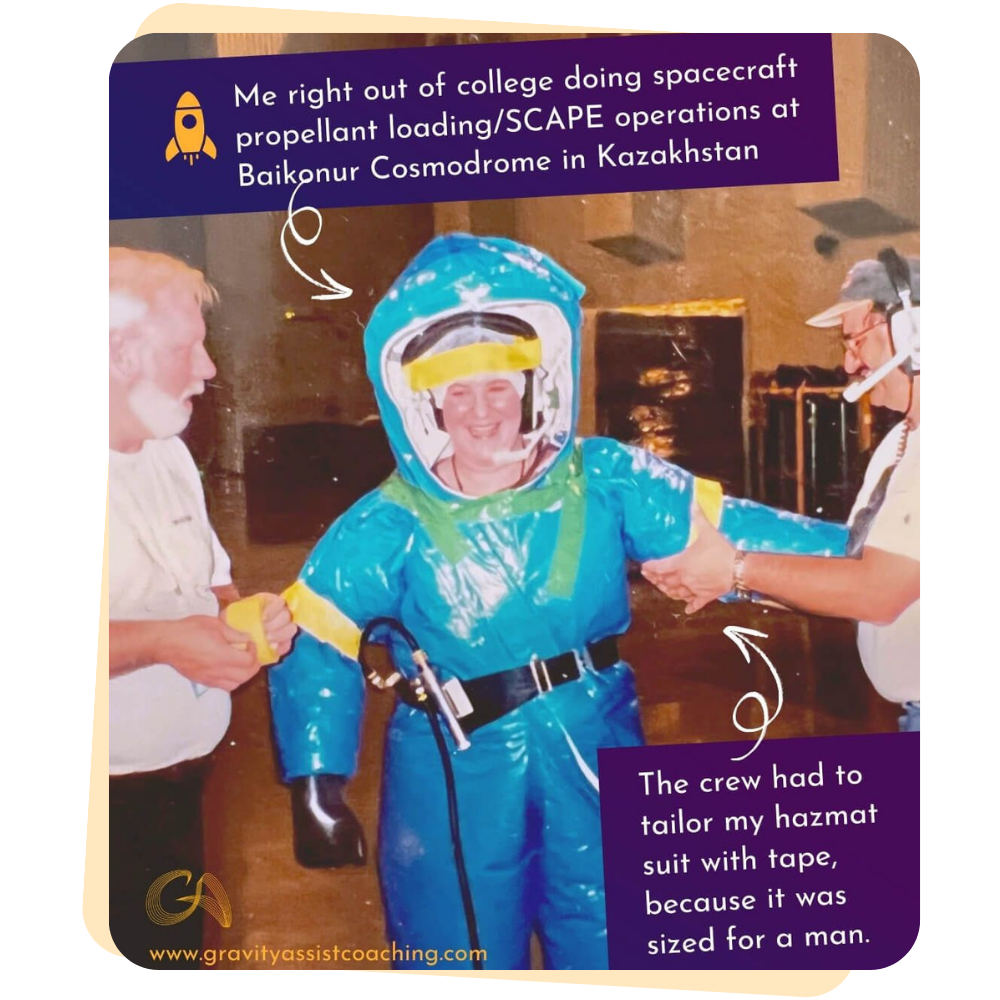
They noticed. They just didn't promote me.
Instead, I got more work. More scope. More responsibility without the title or the compensation to match. I was told to get a mentor. Then another mentor. Then I was put through corporate leadership training (my site actually won awards for how many women and minorities they sent through the program). None of it moved the needle. Because the corporation didn't incentivize that number.
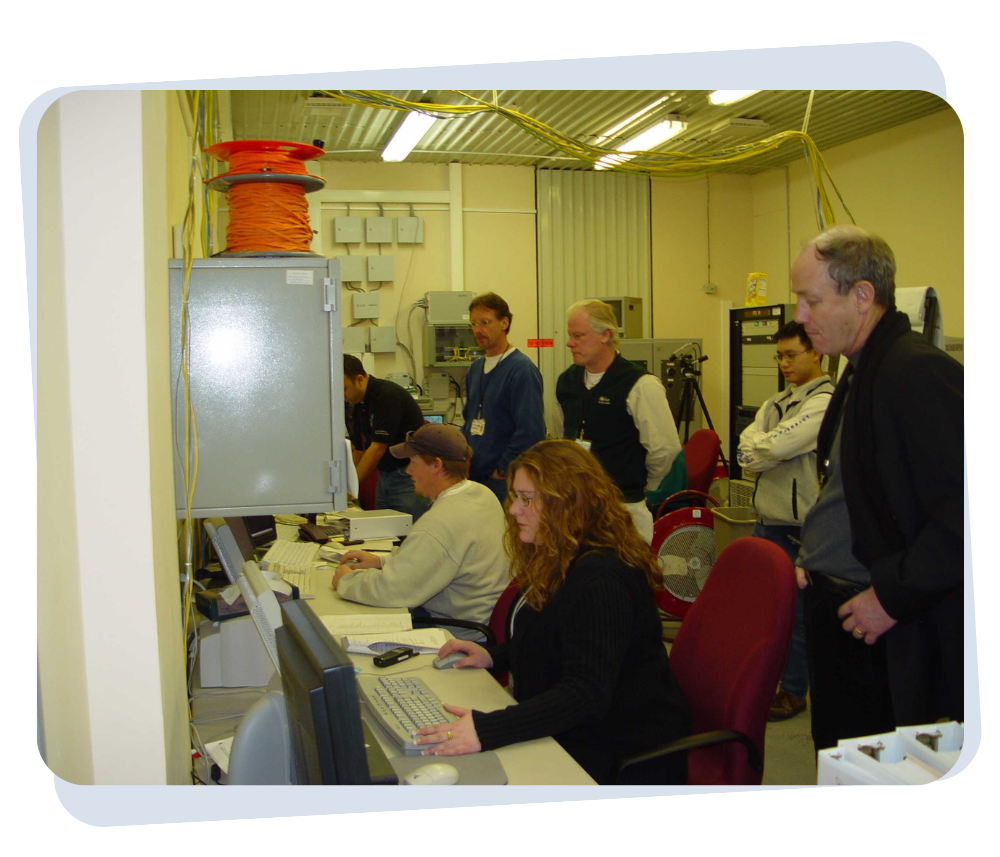
It took me years to understand what was actually happening. Mentors give guidance. That's valuable, but it isn't what moves your name into the rooms where advancement gets decided. What moves your name is a sponsor: a well-connected, well-respected person of influence who is willing to vouch for your expertise, performance, and potential behind closed doors. Most women in STEM don't even know the difference. I didn't, for a long time.
When I finally changed my approach and started building visibility across stakeholders, choosing sponsors based on influence and integrity, and designing proof that traveled to the rooms where decisions got made, everything shifted. My career didn't change because I worked harder. It changed because one aligned sponsor changed my trajectory, and I figured out how to make that repeatable.
And here's the thing. By the time I retired, I had nearly three decades of watching these patterns repeat. I'd seen brilliant women get passed over while less qualified men got the nod because they had the right positioning and the right people carrying their name into the right rooms. I'd watched women get told "not quite ready" year after year while their scope kept expanding and their titles stayed exactly the same. I'd sat in enough promotion discussions on both sides of the table to understand exactly how the system worked and exactly who it worked for.
After 28 years, I'd earned every credential, led every kind of program, won the awards, done the work. And I'd also accumulated something more valuable than any of that: a pattern library. Hundreds of stories from hundreds of women whose experiences, taken together, were statistically significant in ways I'd never seen anyone piece together.
So I took everything I learned and built something I wished had existed when I needed it.
What working with me looks like.



See the real rules
We map how promotion decisions actually get made in your organization, who has influence, where the real conversations happen, and what "ready" actually means at the next level. You'll stop internalizing vague feedback and start responding to it strategically.
Build proof that travels
Your leaders don't automatically see the scope of what you carry. We help you package your highest-impact work into proof stories and executive-ready language for the conversations that actually move advancement forward: manager alignment, sponsor asks, scope negotiations, promotion discussions.
Activate the people who decide
Mentors help you grow. Sponsors move your name in rooms you're not in. We help you build a Career Board of Directors with the right people in the right roles, give you scripts for clean asks, and create a cadence that turns relationships into real advocacy.

"Within months of our coaching sessions, I was invited onto high-visibility projects and promoted. Jennifer helped me articulate my strengths in a way I never had before."

Michelle
Product Team Lead
"Jennifer's coaching gave me a tangible strategy to finally break into a leadership position I'd been chasing for years. I've never felt clearer or more confident."
Maggie
Aerospace Engineer
1,000+
WOMEN COACHED
28
YEARS EXPERIENCE
1st
FEMALE AAS AWARD WINNER
A few things you should know about me.
01
I retired early because my daughter is in middle school and I want to be around while she still thinks I'm cool. (The window is closing. I'm aware.)
02
The name Gravity Assist is an actual aerospace term. I didn't pick it because it sounds good. I picked it because it's exactly what I do.
03
I'm a storyteller who cites research. I can tell you about the patterns from my own 28 years, and I can also show you the data that proves those patterns are statistically significant across the field..

04
I'm remarried now. Both my husband and I were widowed. We built something new from something that felt impossible, and I think that experience shows up in how I coach. Nothing about career advancement happens in a vacuum. You've got kids. Aging parents. Maybe an unhappy marriage. I acknowledge the whole person. Our work together isn't the most important part of your life, but it influences everything about it.
05
I consider myself a strategic guide and advocate, not a "coach." Coach implies fixing something broken. Guide implies showing you a system you can't see. Advocate implies fighting alongside you.

06
I believe women in STEM have an obligation to help other women succeed. Full stop. Every woman who breaks through and extends her hand makes the path a little wider for the next one.
07
And if you're wondering: no, I won't promise you a promotion in 90 days. Coaches who do that are not being honest with you about how corporate systems actually work. What I will promise is that you'll walk away in control of your own career advancement, with the strategy, the proof, and the people to make it happen.
If this is your situation, I'd love to work with you.
I've been exactly where you are, and I spent three decades learning how the system actually decides who advances and why the usual playbook fails. Everything I teach is what I wish someone had handed me when I was the one being overlooked.
You're not the problem. You need a strategy, not a credential.
Not ready to apply? Start here.
Take the free career pattern assessment to find out which promotion trap you're in: the Overlooked Expert, the Scope Sponge, or the Quiet Fixer. Five minutes. One shift in how you see your career.